|
||
|
THE BRAIN BEHIND THE COMICS
- SCRIPTING
- INTERVIEWS
|
|
|
||
 |
ROGER
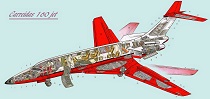
LELOUP Born in Verviers, on November 17th, 1933. Roger Leloup received his training under Jacques Martin (who draws Alix). After serving as long-time assistant he then ended up with Hergé, for whom he executed scenery and technical drawings for 15 years: for example, the modernisation of vehicles in "The Black Island" is his work, along with Nyon train station in "The Calculus Affair", and Carreidas's private jet in "Flight 714". Through hard work and precision he learned the profession. "I have taken over Hergé's biggest fault - the maniacal - but also that you have to believe in your character. I believe in Yoko as he believed in Tintin. And that's why the reader can believe in her too."  There, Roger Leloup also learned the rules a classic comic has to fulfill.
It's a tradition he believes in: accuracy of details and credibility
of the script, even for the most fantastic stories, are necessary components
for a good comic.
There, Roger Leloup also learned the rules a classic comic has to fulfill.
It's a tradition he believes in: accuracy of details and credibility
of the script, even for the most fantastic stories, are necessary components
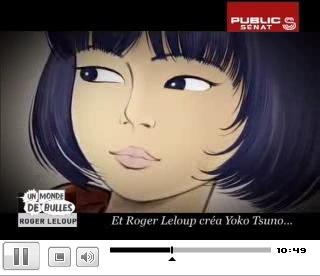
for a good comic."I have a saying that expresses my vision on the profession really well: I am no engineer, but I try to be ingenious.." 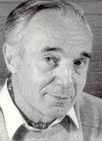 On Christmas Night of 1968, Roger Leloup sketched for the first time the delicate face of a beautiful
Japanese girl. In 1969, he knocked at the door of the
publishing house of Robbedoes. This on the advice of Peyo, with whom he had also
worked. Under his arm, he carried his first draft for "Trio
of the Unknown", the first Yoko Tsuno adventure. One year later
she made her début in a weekly magazine. "Thanks to Yoko I can
now forever live the dreams I had when I was a child. She has the courage,
the cool-headedness and the faith I never had."
On Christmas Night of 1968, Roger Leloup sketched for the first time the delicate face of a beautiful
Japanese girl. In 1969, he knocked at the door of the
publishing house of Robbedoes. This on the advice of Peyo, with whom he had also
worked. Under his arm, he carried his first draft for "Trio
of the Unknown", the first Yoko Tsuno adventure. One year later
she made her début in a weekly magazine. "Thanks to Yoko I can
now forever live the dreams I had when I was a child. She has the courage,
the cool-headedness and the faith I never had."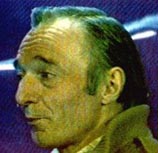 You don't need 26 albums to prove that Roger Leloup can be called one of
the greatest contemporary authors of comics - an author that is capable of
taking us along to a faraway past, or a planet that exists milions of light-years
away. This talented, methodical and precise storyteller has created a world that rings
logically from beginning to end, and that is created around a modern
heroine. A heroine in the noble sense of the word: human, tolerant, respectful
- even to those who have wandered from the straight path.
You don't need 26 albums to prove that Roger Leloup can be called one of
the greatest contemporary authors of comics - an author that is capable of
taking us along to a faraway past, or a planet that exists milions of light-years
away. This talented, methodical and precise storyteller has created a world that rings
logically from beginning to end, and that is created around a modern
heroine. A heroine in the noble sense of the word: human, tolerant, respectful
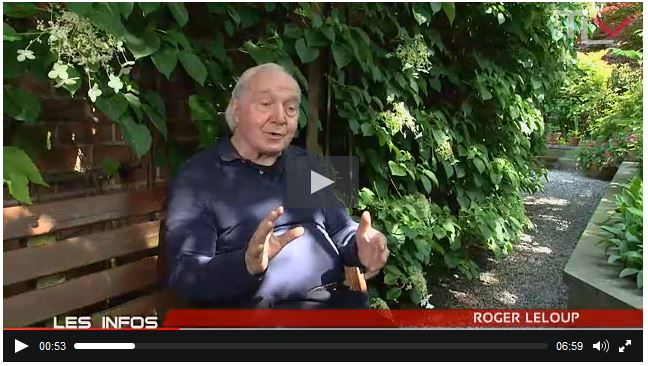
- even to those who have wandered from the straight path.Above: Roger Leloup appearing on Channel 2. (Image courtesy of Theo Jakiemów) Below: Roger Leloup together
with Caroline Arssenault. Several years ago, this girl won a Yoko Tsuno look-alike
competition in Canada. |
|
|
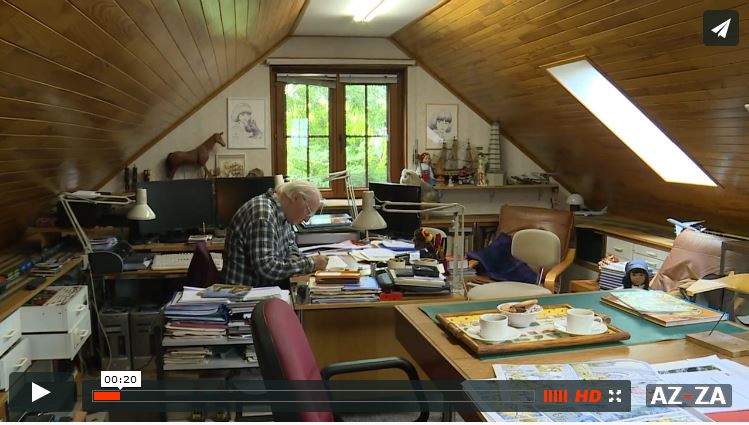
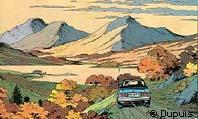 During the 15 year he worked with Herge (Tintin), Roger Leloup learned
how important it is to make his scenery as beautiful and real as possible. Otherwise,
many of the strip`s readers wouldn't like the stories. "I made
the backgrounds. The most difficult part was to merge the style of the characters
and the background."
During the 15 year he worked with Herge (Tintin), Roger Leloup learned
how important it is to make his scenery as beautiful and real as possible. Otherwise,
many of the strip`s readers wouldn't like the stories. "I made
the backgrounds. The most difficult part was to merge the style of the characters
and the background." 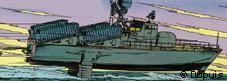 "The
vehicles on earth are exactly the same as real ones. Houses and monuments
are photorealistically exact. I base my drawings on buildings I have studied and
looked at. Sometimes I even make models to develop more possibilities." "The
vehicles on earth are exactly the same as real ones. Houses and monuments
are photorealistically exact. I base my drawings on buildings I have studied and
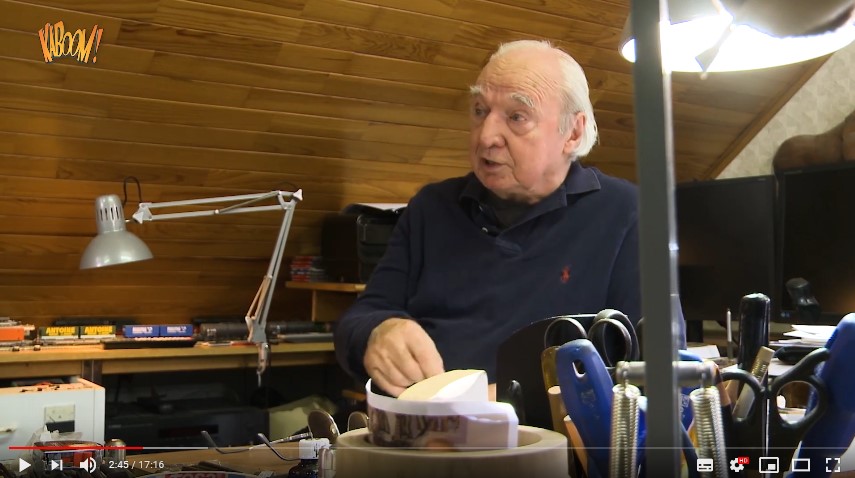
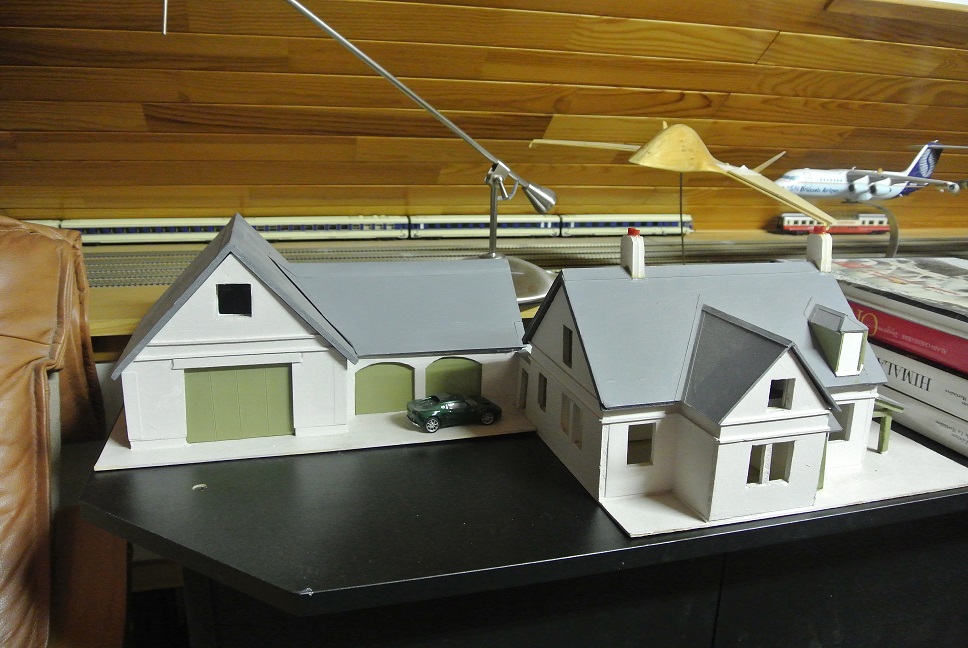
looked at. Sometimes I even make models to develop more possibilities." 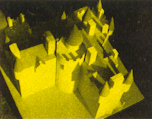 Here is an example of
a model that Roger Leloup himself made, with wonderful result. This model
was used to elaborate details for the castle in "Prey and Shadow". (Image courtesy of Branca Heus)
Here is an example of
a model that Roger Leloup himself made, with wonderful result. This model
was used to elaborate details for the castle in "Prey and Shadow". (Image courtesy of Branca Heus)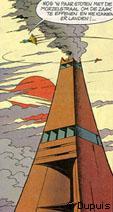 "When I write a science-fiction story, then I haven't got any examples.
Everything is already there in my mind. So I can draw anything I want and
let my fantasy flow forth. But when I'm back on earth, everything has to be exactly
as we know it. I love to draw sci-fi. In my mind, I built the cities of Vinea,
Shyra on Ixo, the satellite city Kifa... they all are glorious graphical
wonders of pure imagination. When I start to draw backgrounds like
that, I only draw what I find beautiful."
"When I write a science-fiction story, then I haven't got any examples.
Everything is already there in my mind. So I can draw anything I want and
let my fantasy flow forth. But when I'm back on earth, everything has to be exactly
as we know it. I love to draw sci-fi. In my mind, I built the cities of Vinea,
Shyra on Ixo, the satellite city Kifa... they all are glorious graphical
wonders of pure imagination. When I start to draw backgrounds like
that, I only draw what I find beautiful." |
|
|
|
|
|
||
|
|
|
|
||
|
Interview of Roger Leloup by Ilse |
|
|
||
|
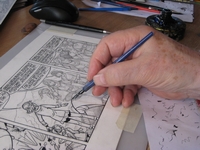
Interview of Roger Leloup by Actua BD (in French) (page 1, page 2, page 3) |
|
|
||
|
Interview of Roger Leloup about Hergé by Ket Paddle (in French) (1st part, 2nd part) |
|
|
||
|
Interview of Roger Leloup in Spirou for the prepublication of "Khâny's secret" (in French) (1st part) |
|
|
||
|
|
|
|
||
|
|
|
|
||
|
|
|
|
||
|
|
|
|
||
|
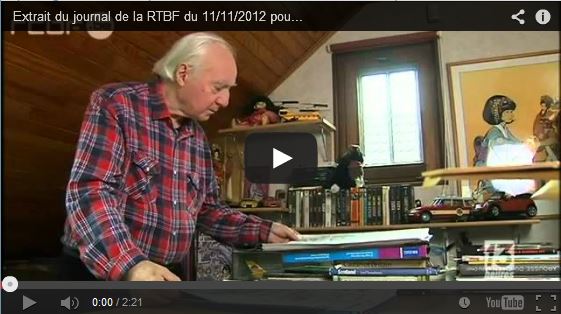
 Part of the program "On dira ce qu'on voudra" on ICI Première of Radio Canada about Yoko (for the 50 year of the first publication in Spirou). With extracts of interviews of Roger Leloup. (in French)
(14/09/2020) |
|
|
||
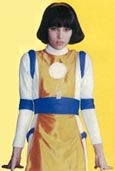
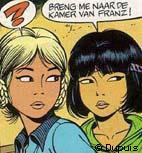 It's no coincidence that hundreds of thousands of readers worldwide are
fascinated by this young Japanese woman who is yet so distant. That is
because she speaks the only language that everyone understands: the language
of the heart. This is how Roger Leloup achieved a place amongst the rare
humanists in the world of the comic books. "My secret", he admits,
"is that I keep looking at the world with the astonishment of a child."
It's no coincidence that hundreds of thousands of readers worldwide are
fascinated by this young Japanese woman who is yet so distant. That is
because she speaks the only language that everyone understands: the language
of the heart. This is how Roger Leloup achieved a place amongst the rare
humanists in the world of the comic books. "My secret", he admits,
"is that I keep looking at the world with the astonishment of a child."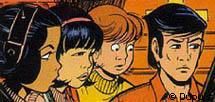 "The luck that I have to live with Yoko is worth so much more to
me than the fun I could be having somewhere else," Roger Leloup continues. "I
am happy when I see that she's happy. I'm not in love with my character
as some people might think. It goes beyond that. Even for me she stays
a character on paper. She will never talk to me. But I know that through
Yoko I can convey the emotion and poetry that lives inside me. She is
that friend I've always wanted to have when I was young but never met.
Through time she has become my spiritual daughter."
"The luck that I have to live with Yoko is worth so much more to
me than the fun I could be having somewhere else," Roger Leloup continues. "I
am happy when I see that she's happy. I'm not in love with my character
as some people might think. It goes beyond that. Even for me she stays
a character on paper. She will never talk to me. But I know that through
Yoko I can convey the emotion and poetry that lives inside me. She is
that friend I've always wanted to have when I was young but never met.
Through time she has become my spiritual daughter."